Independent Rear Suspension: How It Improves Ride Comfort
In modern cars, both comfort and handling are equally important....
In modern cars, both comfort and handling are equally important. That’s why manufacturers design advanced suspension systems that ensure a smooth ride without compromising control. One such innovation is the Independent Rear Suspension (IRS).
Unlike old rigid axle systems, IRS allows each rear wheel to move independently. This means when one wheel hits a bump, the other stays unaffected—resulting in better stability, fewer jolts, and higher driver confidence. Today, IRS is widely used in sports cars, premium SUVs, and luxury sedans, as it offers the perfect balance of performance, safety, and comfort.
In this blog, we’ll explain IRS in detail—its meaning, working, advantages, disadvantages, and why it makes such a big difference in your driving experience.
IRS = Independent Rear Suspension
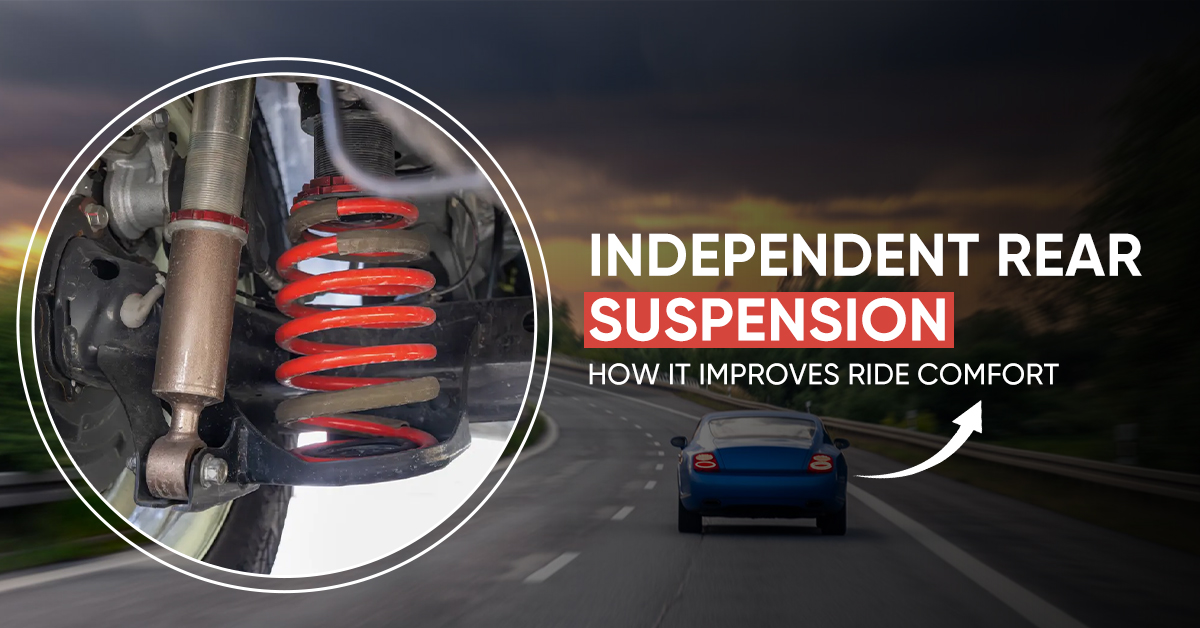
Each rear wheel has its own springs, shock absorbers, and arms.
If one wheel crosses a pothole, the other wheel is not directly affected.
This improves both ride comfort and stability.
In contrast, older cars used rigid axles, where the movement of one wheel was transferred to the other.
IRS is a suspension setup where both rear wheels operate independently. Each wheel adjusts its position according to road conditions without disturbing the other.
Equipped with separate shock absorbers, springs, and control arms.
Enhances road grip, balance, and comfort, especially on rough surfaces or sharp turns.
Though mechanically more complex than rigid axles, IRS delivers a refined driving experience.
✅ Superior Comfort – Bumps and potholes are absorbed better, reducing vibrations inside the cabin.
✅ Improved Handling – Strong grip during sharp turns and reduced body roll.
✅ High-Speed Stability – Keeps wheels firmly on the road, boosting driver confidence.
✅ Off-Road Performance – Adapts to uneven terrain without sending harsh jolts into the cabin.
✅ Even Tyre Wear – Extends tyre life by maintaining better alignment.
This is why IRS is standard in sports cars and premium SUVs, where comfort and handling matter most.
❌ Higher Cost – Complex design makes cars with IRS more expensive.
❌ Expensive Maintenance – Repairs require skilled mechanics and can be costly.
❌ Durability Concerns – Rigid axles may perform better in extreme off-road conditions.
❌ More Moving Parts – Control arms, joints, and springs wear out over time.
So, while IRS offers unmatched comfort, you need to spend a little more on purchase and upkeep.
Comfort: Each wheel responds separately, reducing cabin vibrations and jolts.
Handling: Stronger grip in corners, less body roll, and predictable control.
Stability: Keeps the car balanced even on wet, gravel, or uneven roads.
For this reason, IRS has become the go-to choice for premium cars, sports models, and modern SUVs.
Driving is more than just reaching your destination—it’s about the experience. Independent Rear Suspension makes that experience smoother and safer. Whether it’s potholes, sharp turns, or high-speed driving, IRS ensures passengers feel fewer jolts and drivers enjoy full control.
That’s why this system is a hidden hero in many luxury sedans, SUVs, and sports cars—working quietly to keep every ride comfortable and stable.
Q. What does an independent rear suspension do?
It allows both rear wheels to move independently. If one wheel hits a bump, the other remains unaffected—improving comfort and grip.
Q. Is IRS worth it?
Yes. If you value comfort, stability, and handling, IRS is absolutely worth it.
Q. What are the disadvantages of IRS?
Higher cost, complex maintenance, and slightly less durability in extreme off-road conditions.
Q. Which is better: dependent or independent suspension?
Dependent (Rigid Axle): Cheaper, durable, and good for heavy-duty use.
Independent (IRS): Superior comfort, handling, and stability—best for performance and everyday driving.
Q. Which SUV has the best suspension in India?
Models like Toyota Fortuner, Jeep Meridian, Hyundai Tucson, and MG Gloster are popular for their well-tuned suspension that balances comfort and control.